Talkiatry -
Design systems development
Building, maintaining, and upgrading design systems, processes, and documentation
Role: Design Lead | Tenure: 4 years ongoing
Talkiatry is a national mental healthcare practice led by psychiatrists. Over four-plus years, my role has grown from Designer to Senior Designer to Design Lead.
One of my main efforts in early 2025 was building out the design systems to operationalize our new brand expansion. This included our website and email design systems in Figma, Adobe libraries, various design and motion templates, etc. This case study focuses on the Figma design system builds.
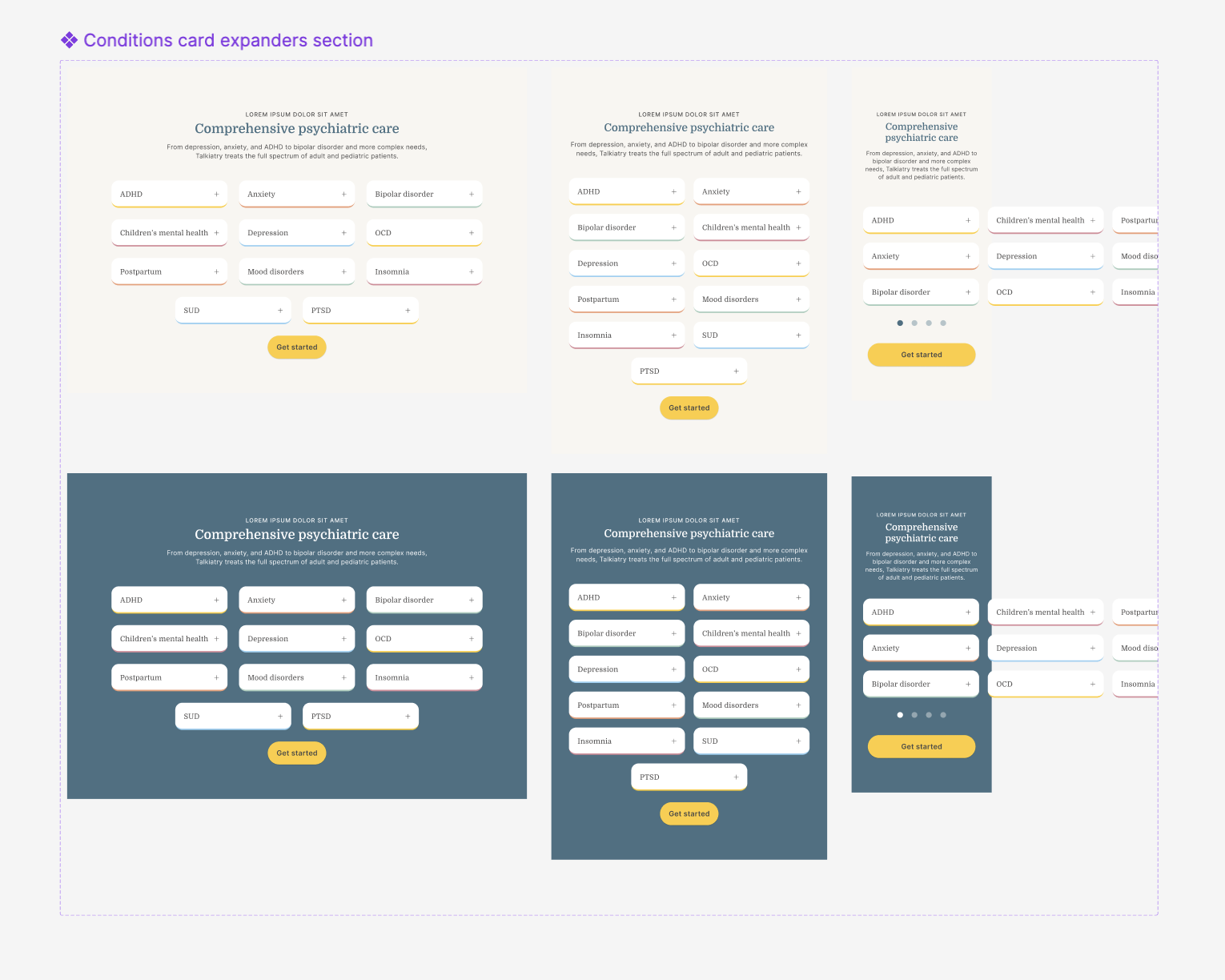
A web design system built for practicality for a small, crafty team
As Talkiatry grew, our tiny team needed a better system for building and maintaining the website. We had more patients, more clinicians, more lines of business, and needed to collaborate with more internal and external partners.
Following our brand expansion, I translated our updated visual direction into a functional toolset. I led, socialized, published, and continue to expand and maintain our design system library and templated files in Figma.
Since launch, the system has reduced time spent designing new pages by 60%, improved design quality and consistency, and standardized the process for each new build.
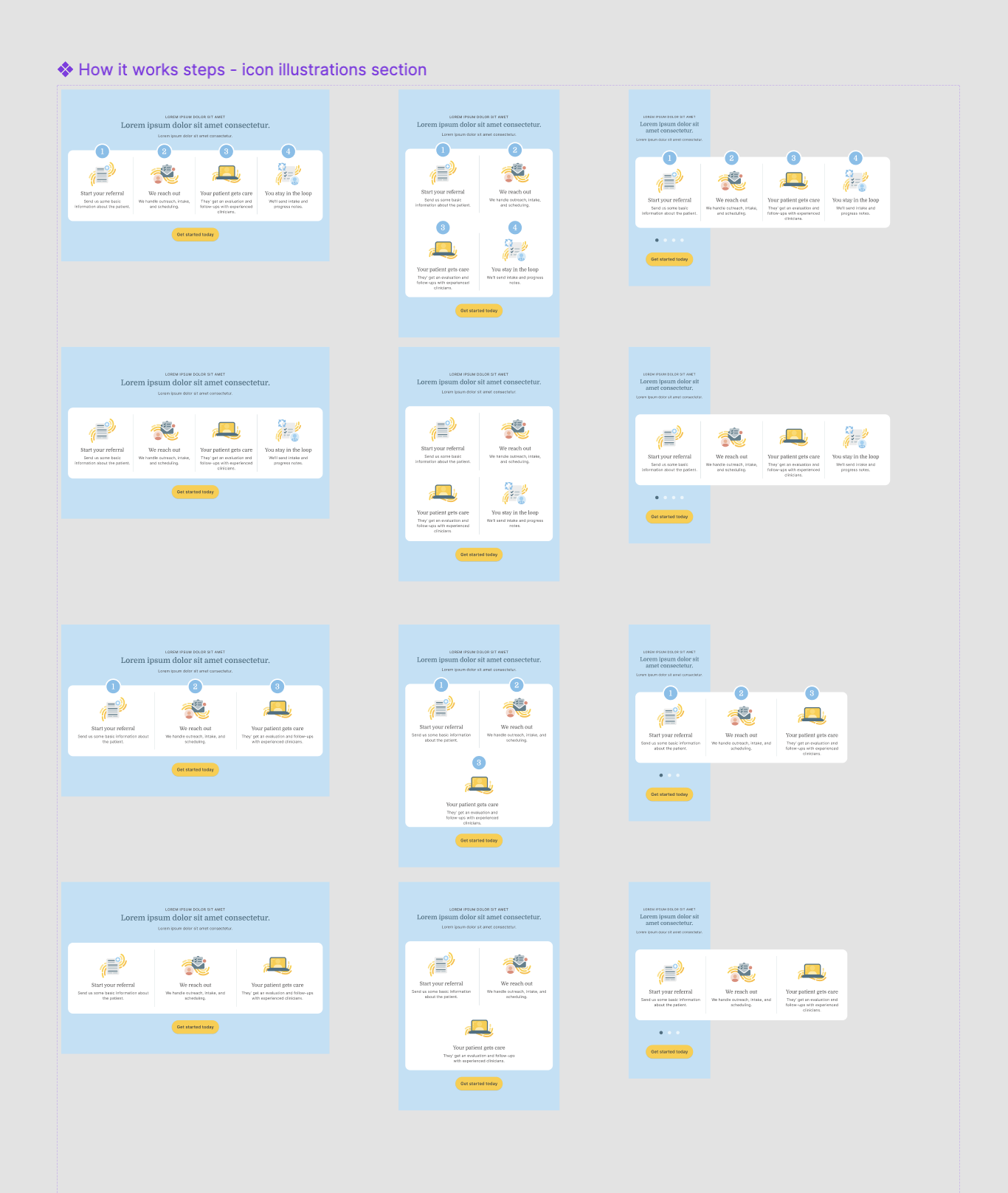
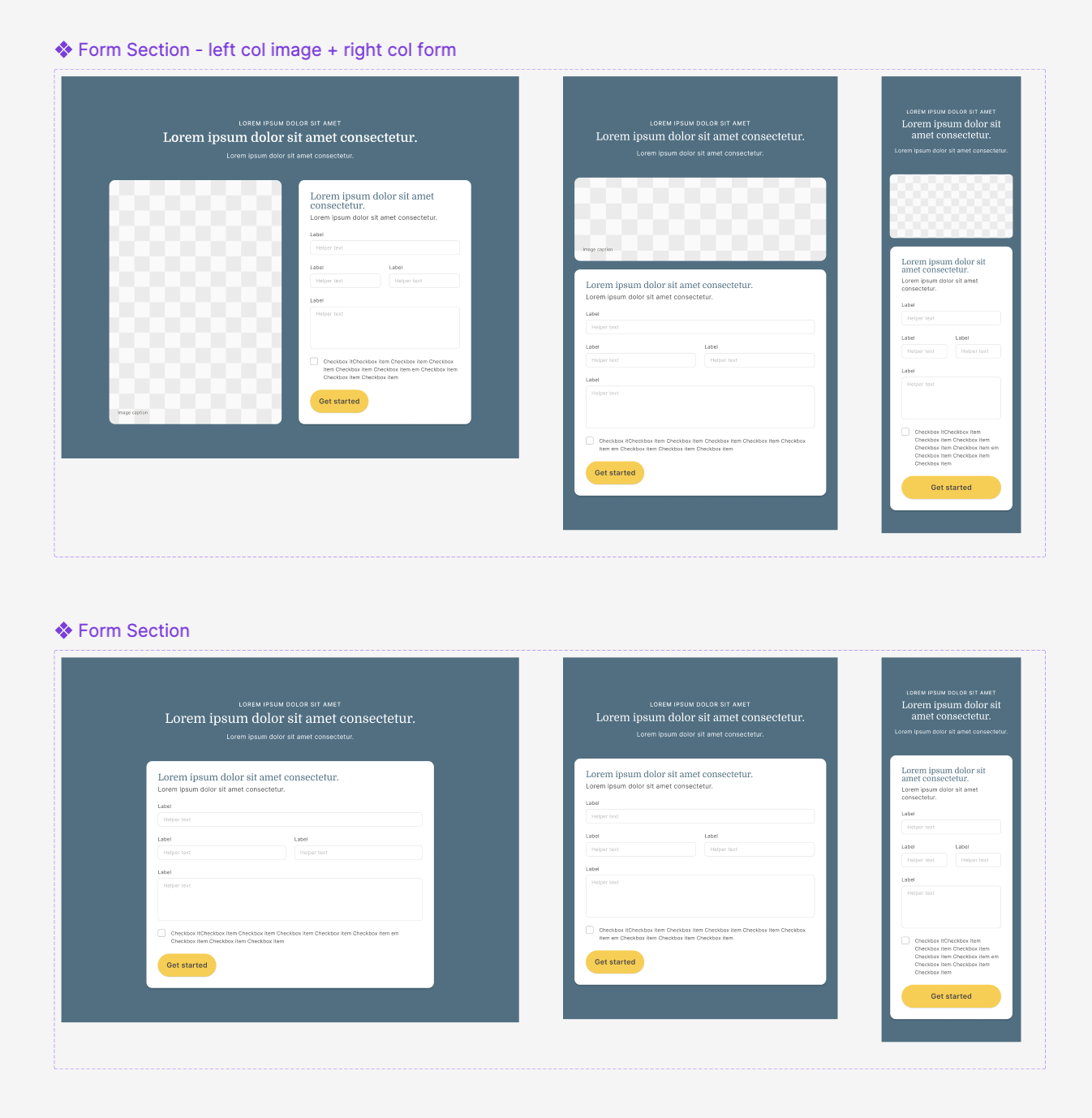
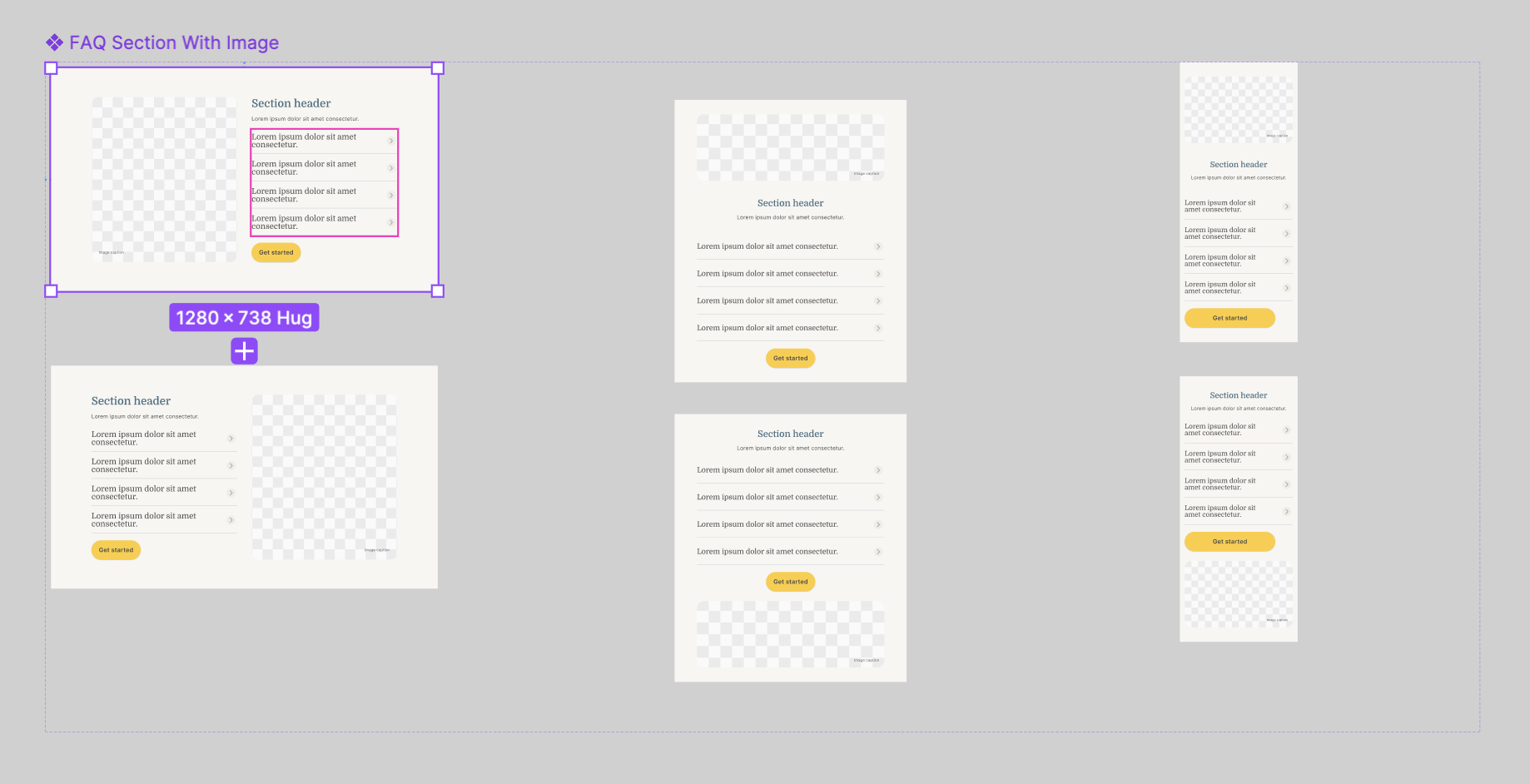
An email design system to unblock rapid cross-collaboration
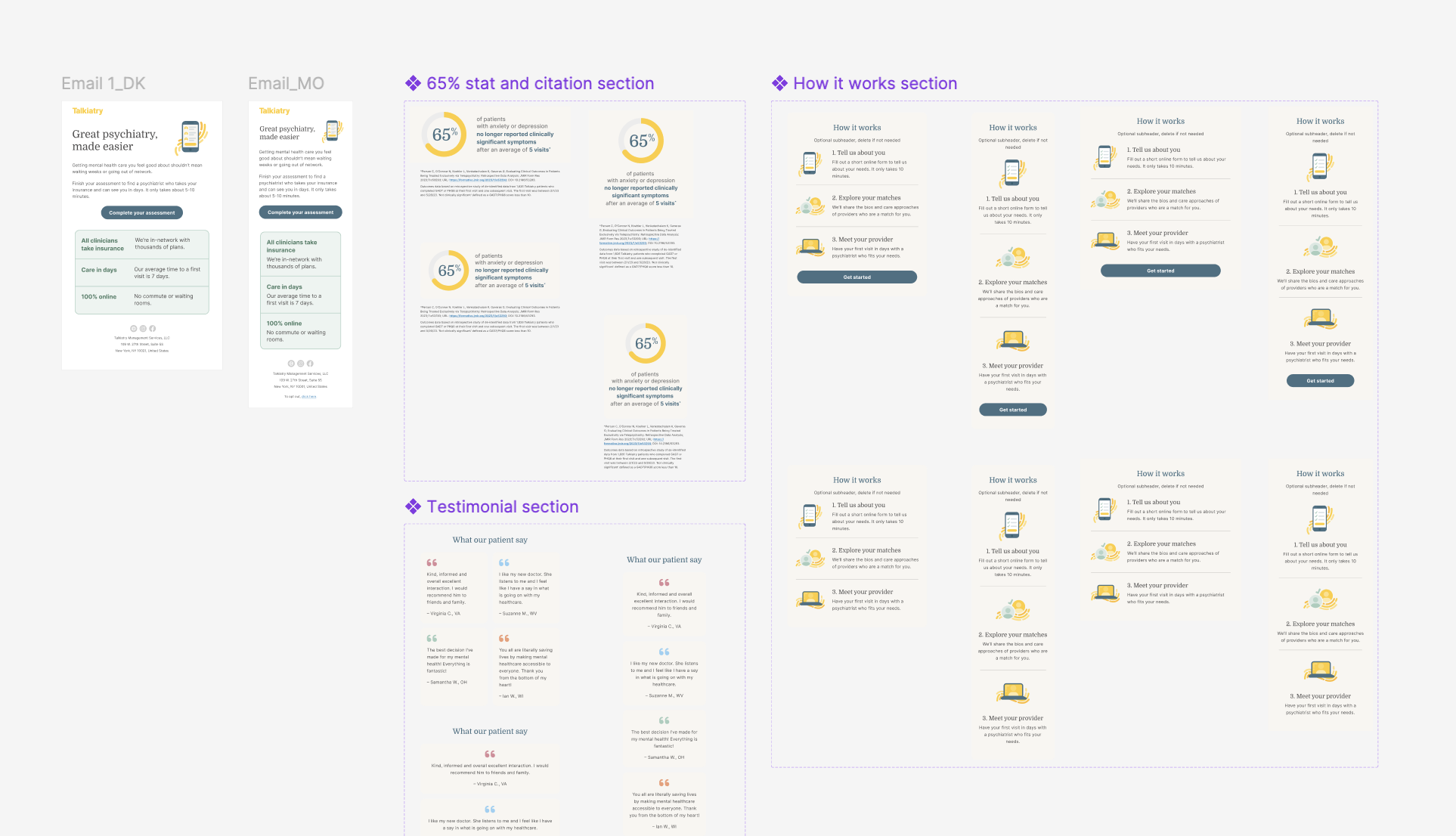
The website design system became the foundation for an email subdesign system. Developing it was instrumental for rapid email design and development in collaboration with our lifecycle management team.
Paired with a sprint cycle and process that I helped outline and standardize, efficiency greatly improved, and time spent on routine email and journey builds was cut in half.
Illustrations and icons systemically and thoughtfully crafted across platforms
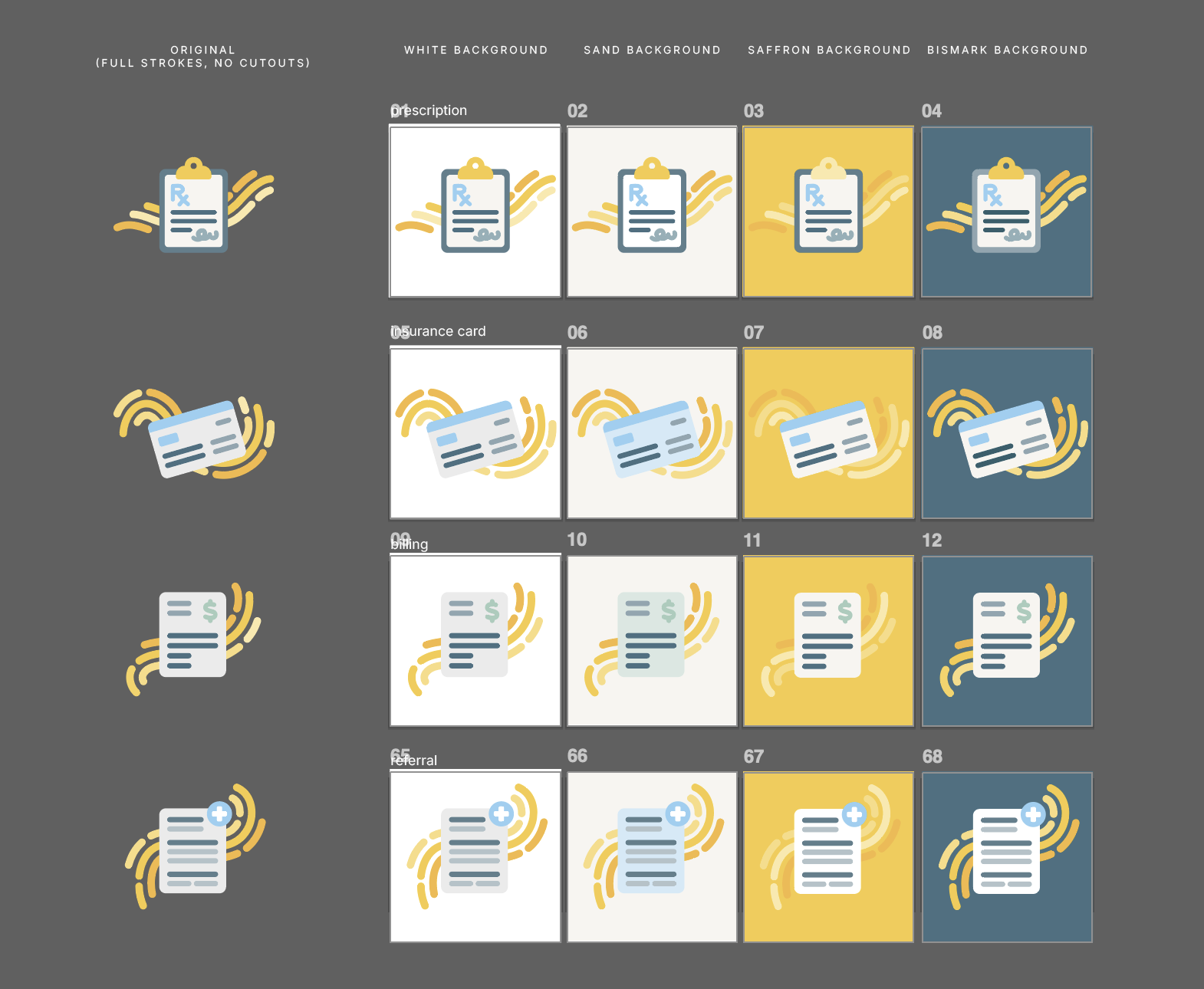
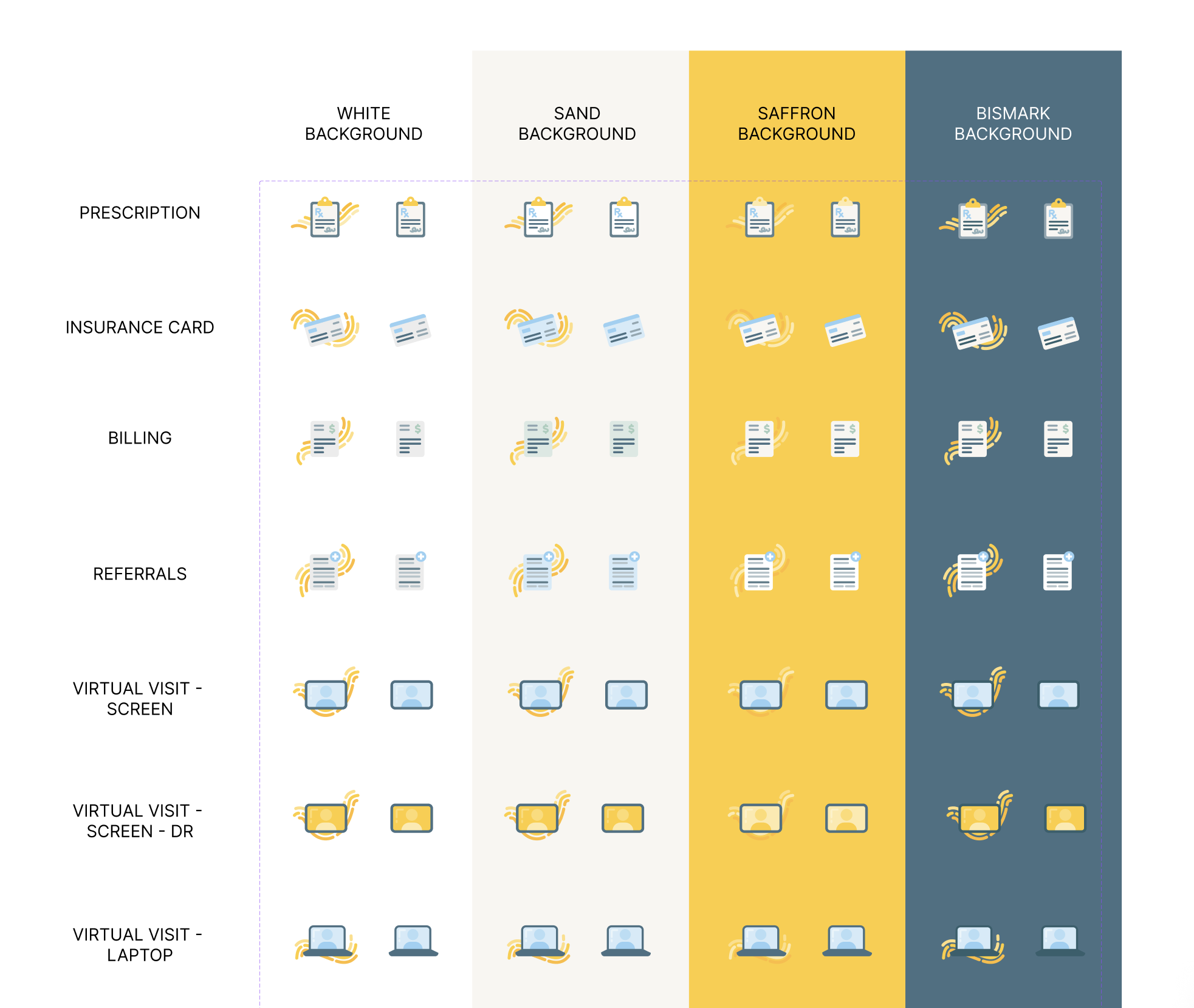
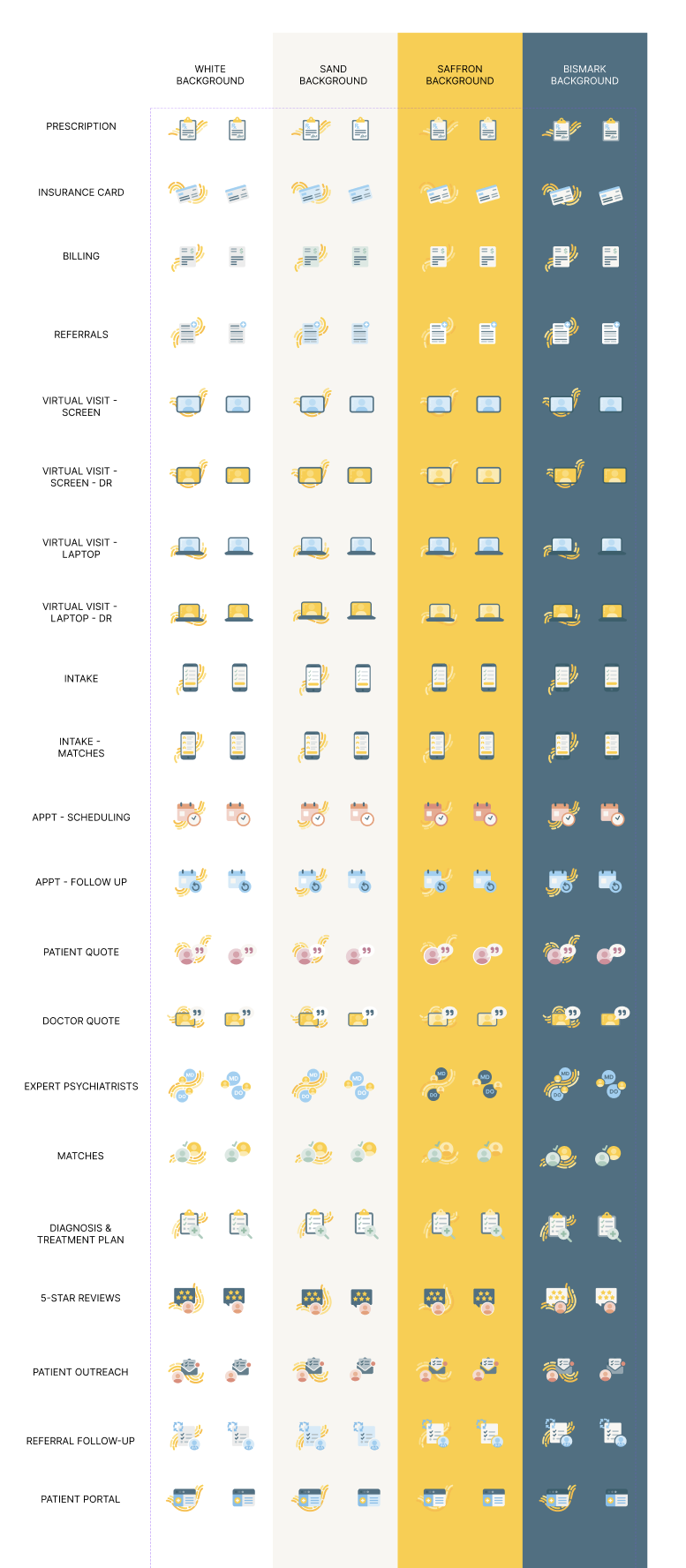
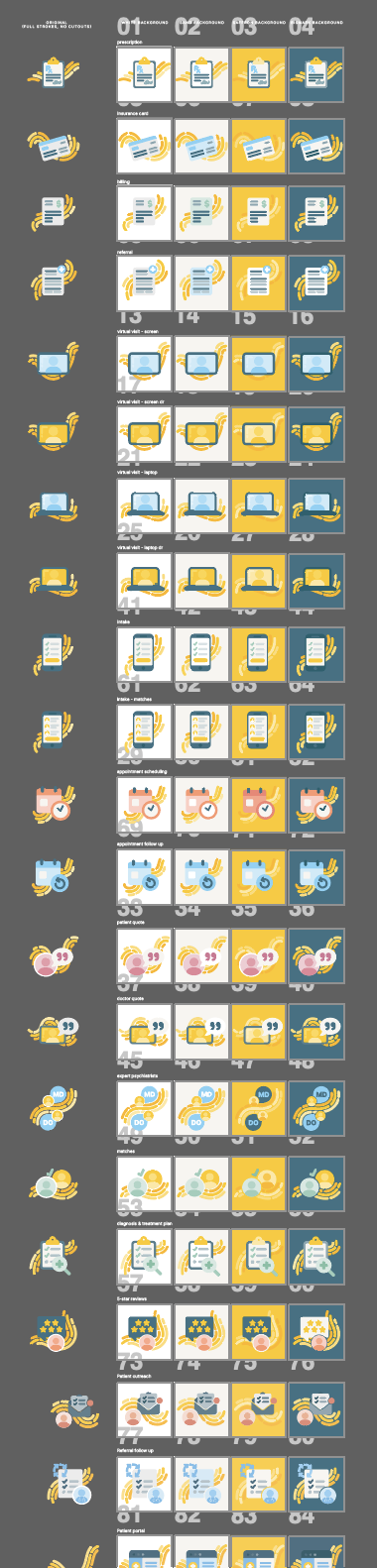
The photo illustrations and icon illustration sets that I built as part of Talkiatry’s brand expansion also needed to be adaptable within our design system.
Building them as reconfigurable components made it easier to make contextually appropriate changes across webpages, emails, ads, etc. Whether that’s making slight tweaks to color composition on different backgrounds, swapping insurance logos and states, or changing a photo to match the subject matter of the content.
They were built as living, evolving design elements, not static graphics.